
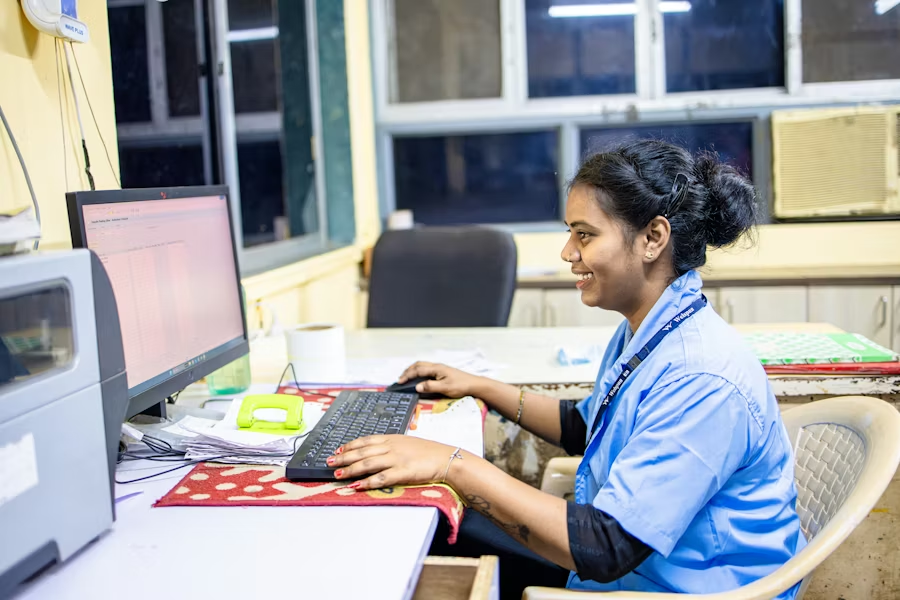
As more women enter the workforce than ever before, we also find increasing gender disparities in rates of employment, job growth, and payment parity that may not be attributable to cultural factors restricting entry into the labour force alone.
As such, in order to inform a larger move towards employment equity that is gender-agnostic, it is necessary to be able to identify the presence of gender bias and discrimination in hiring procedures to ensure that employment interventions are being made at all necessary intersections to reduce the barriers to entry. This project employs a large-scale correspondence audit study to investigate gender-based discrimination in hiring across India’s urban labor markets.
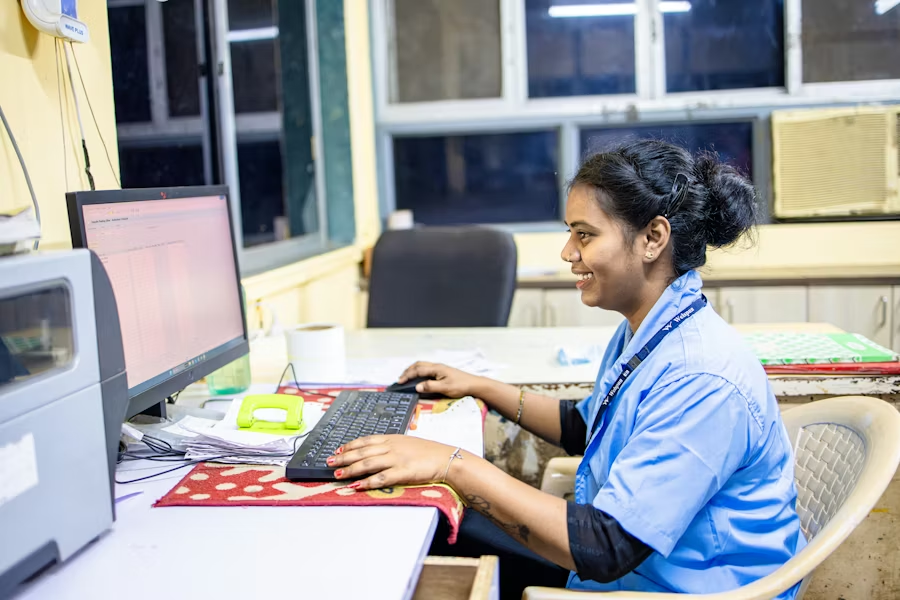
In the pilot phase, several hundred fictitious job applications were generated and submitted in matched sets of four to vacancies posted on leading online job portals such as Naukri.com. Each set of applications was identical in qualifications, experience, and skills, differing only in gender-identifying markers (e.g., applicant names) to isolate differential employer responses based on gender. To ensure realism, the research team drew on publicly available CV repositories and used artificial intelligence tools to generate resumes consistent with prevailing hiring norms. AI-based recruitment software was additionally employed to verify that the fictitious applications were comparable in quality and authenticity to real candidates in the labor market.
To mitigate potential confounding effects, characteristics such as caste and religion are held constant within each matched set of four applications, ensuring that observed differences in employer responses can be attributed to gender rather than overlapping forms of discrimination. In extended versions of the study, these attributes are systematically varied across different matched sets—while remaining uniform within each set—to separately examine the influence of caste and religion without generating conflicting interpretations. Insights from the pilot will inform the full-scale implementation, including decisions on sample size, job category coverage, and experimental design refinements.
The project offers experimental evidence on gender disparities in access to employment opportunities, contributing to debates on structural barriers to women’s labor force participation in India. Its findings are particularly salient in the context of recent policy changes, including the Maternity Benefit (Amendment) Act, 2017, and will inform both scholarly and policy-oriented discussions.
Anticipated outputs include peer-reviewed publications, policy briefs, and engagements with key stakeholders through workshops and consultations.