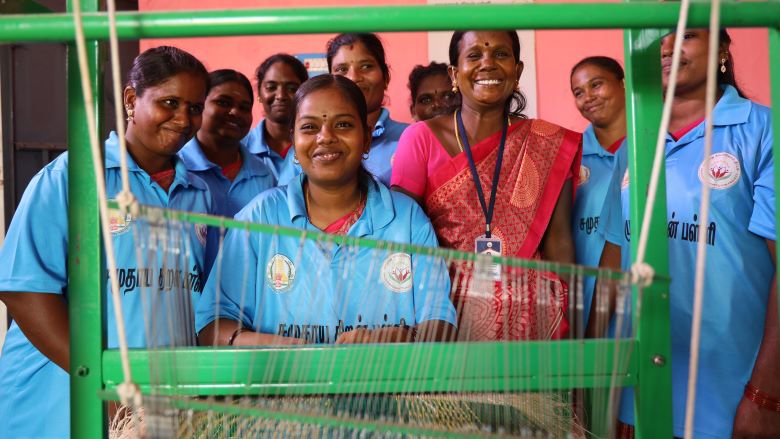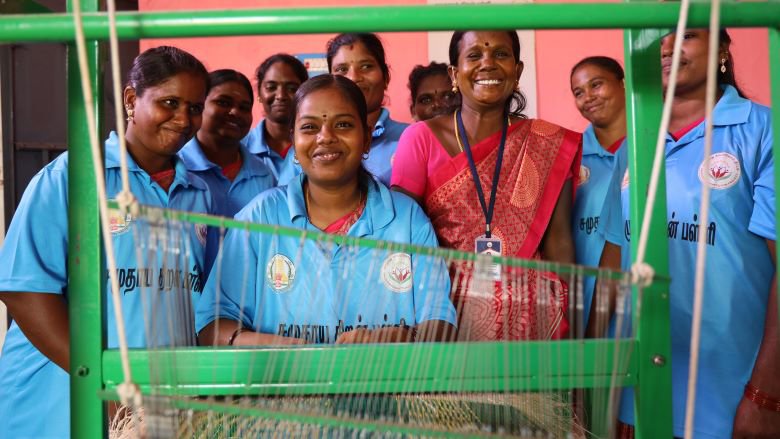
The Vazhndhu Kattuvom Project is a transformational poverty reduction programme initiated by government bodies in Tamil Nadu in partnership with the World Bank. This programme seeks to empower rural communities with entrepreneurship, access to capital and job opportunities, to go beyond reducing poverty into fostering sustainable prosperity in rural communities. The Tamil Nadu Pudhu Vaazhvu Project (TNPVP), Tamil Nadu State Rural Livelihoods Mission (TNSRLM), and National Rural Livelihoods Project (NRLP) have contributed institutional capital and investments that the Vazhndhu Kattuvom Project is based on.

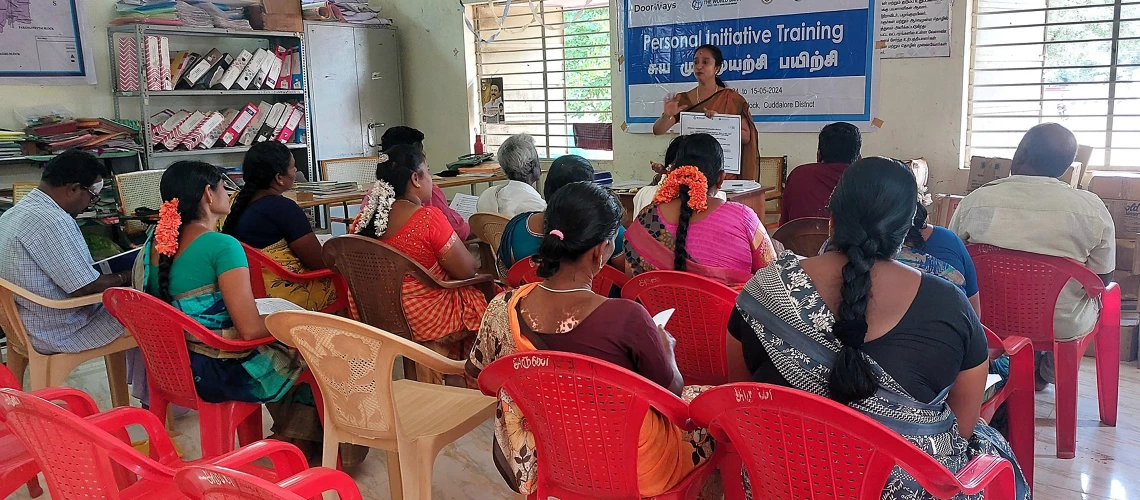
The intervention was conducted by the partner organisation ‘Hand in Hand’. It consisted of a 12 week curriculum with weekly 3-hour sessions tailored to rural entrepreneurial contexts. Participants engaged in interactive exercises designed to build confidence, agency, and persistence. These exercises took place in mixed-gender groups of approximately 20 for each session, with the VKP’s Enterprise Community Professionals (ECPs) and Hand in Hand India jointly overseeing mobilization and facilitation, with trainers selected from a vetted pool of experts in rural entrepreneurship development.
In order to assess the impact of this intervention, the project has employed a rigorous Randomized Control Trial (RCT) to evaluate the impact of this training amongst entrepreneurs under the Tamil Nadu Rural Transformation Project (TNRTP).
The eligibility criteria for selection included operating a business for more than six months, employing fewer than 15 individuals, active participation in business decision-making, and being married.
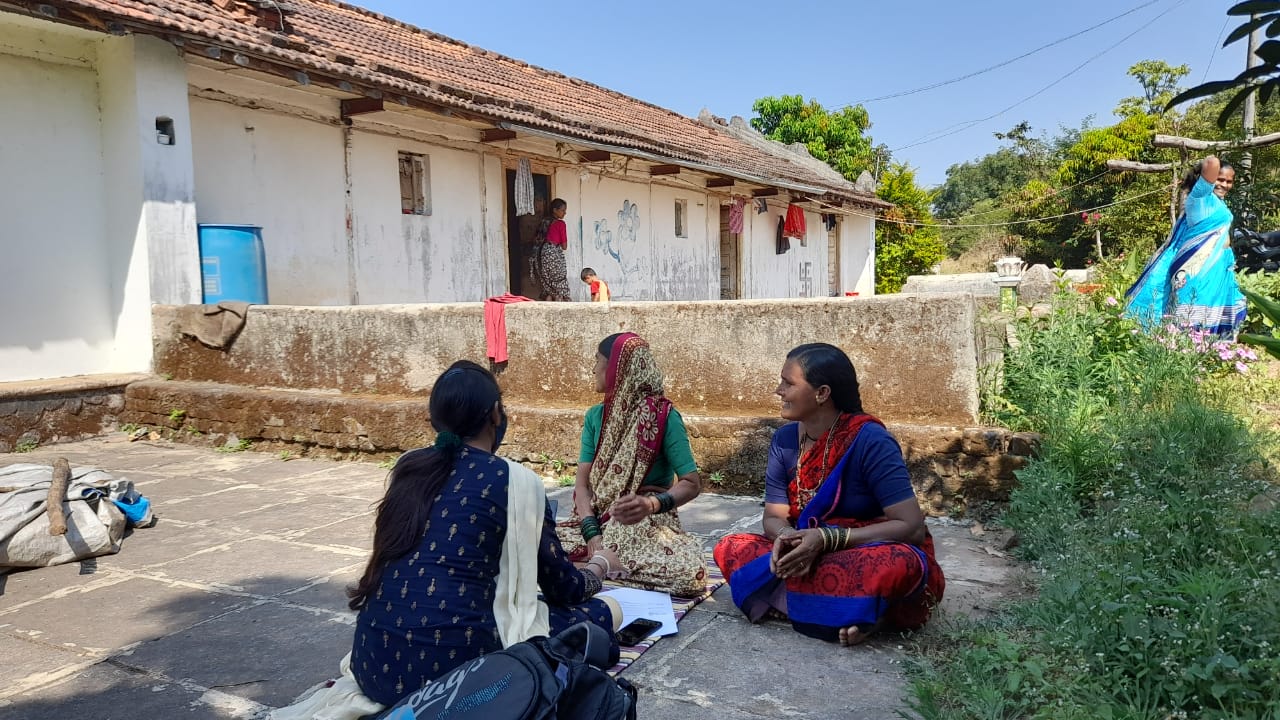
We conducted a comprehensive baseline survey for this group between December 2023 - February 2024, capturing a wide array of variables: business performance, decision-making, entrepreneurial behaviors, household conditions, and aspirations
Each survey round also tracks key business metrics as well, including revenues, profits, inventory, and workforce, alongside indicators of agency, strategic thinking, and goal-setting.
After the intervention was conducted, we conducted the midline survey between March - May 2025, with an endline survey scheduled for June 2025.
This intervention is designed to enhance business outcomes for rural entrepreneurs, with the goal being to generate measurable improvements in business performance such as increased revenues, improved profitability, and business expansion, with the added benefits accrued in job creation and enhanced household economic resilience.
The integrated model aims not only to strengthen the participants' technical skills, but their mindset when it comes to proactive behaviour, persistence and goal setting. It is positioned to inform evidence based policy and programmatic decisions at scale. Our evaluation is structured to allows for a robust measurement of short- and medium-term changes, providing actionable insights into the effectiveness of this intervention at all phases of its growth. The researched backed design of the program is intended to create a replicable model that can be deployed across similar contexts to encourage inclusive economic development through sustainable livelihoods.
While final results are pending full analysis, the high retention rate and fidelity to the experimental design ensure that forthcoming findings will provide credible insights into the program’s effectiveness. Early indications suggest that the intervention improved participants’ goal-setting, business planning, and confidence—key behavioral shifts associated with long-term enterprise growth.